

Plastics and Your Pets: A Primer
Posted by Purrfectplay on Oct 08, 2014
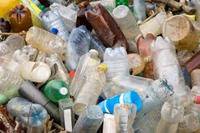
Plastics are everywhere--they have a huge range of practical uses. The use of plastic is so common we often don't think about its presence in our lives. The commonness of plastic has rendered it invisible. Many scientists are worried about the total blanketing of the planet in plastic and plastic by products. They say that plastic is a carcinogen, a hormone disrupter, and toxic to our internal organs. They also say that its byproducts have wriggled their way into every facet of the planet's life.
A Plastics Primer
Plastics are polymers (many units). You can think of a polymer as a tiny chain made of many units called mers. So a polymer is a chain of "mers". To make this chain the units are polymerized or stuck together. These units are usually made of carbon, hydrogen, oxygen and/or silicon.
Many common classes of polymers are composed of hydrogen and carbon. There are polymers that contain only carbon and hydrogen. Examples of these are: Polypropylene, polybutylene, polystyrene and polymethylpentene. Other elements can also be involved. Polyvinyl chloride (PVC) contains chlorine (a topic for another newsletter). Nylon contains nitrogen. Teflon contains fluorine. Polyester and polycarbonates contain oxygen.
What is the big deal with polymers?
Plastics are an amazing invention, so what is the big deal? Doesn't the "sticky effects" of polymerization create stable and non-reactive compounds? Hmmm--- sometimes.
Intermingled with the polymer chains are single units called monomers and this is where trouble rears its head. Monomers are much more biologically active than polymers. Monomers are created in a number of ways. They may escape the sticking together process of polymerization and remain "free agents". They might be residue-- left behind after special chemicals are added to give the plastic a unique functional characteristic. Destructive processes such as chewing, grinding, aging, heating, and micro waving can also release monomers from the polymer chain.
Plasticizers
Plasticizers are monomers which are particularly problematic and very common. Without plasticizers many types of plastic are rigid, difficult to shape and mold. Plasticizers impart flexibility to plastics. They do this by interspersing around the polymer chains, preventing them from creating a tight bond. Two major families of plasticizers are the adipates and phthalates. These chemicals are known to leach out of plastic containers into foods and liquids. This is why one should not microwave food in a plastic container or drink water from a sun warmed plastic bottle. In mice, these chemicals have been shown to cause birth defects, fetal death and damage to liver, kidneys, lungs, and reproductive organs. Some experts have implicated the hormone disruption effects of plastics in our increased incidents of cancer, especially breast cancer.
Adipates and phthalates do much of their damage through a process called "endocrine/ hormone disruption". By mimicking or blocking natural hormones they disrupt the body's normal functioning. Because endocrine disruptors affect development of the body's vital organ and hormone systems, infants, children, fetuses, kittens, and puppies are more vulnerable to exposure than fully formed adults.
The Effects of Plastic on Your Pets
Canada, most of Europe and some major cities in the US have begun to ban the use of phthalates and other known hormone disrupters in the manufacturing of baby toys, teething rings, and baby bottles. They say the known and unknown risks are too high to tolerate the presence of these chemicals in anything a baby will chew on or drink from. The main types of plastics banned from these uses are: Polyvinyl Chloride (PVC) which contains toxic monomers (the chlorine is the bad guy here) along with the plasticizers that make it pliable, and Bisphenol A (BPA) found in many polycarbonate plastics. BPA is found in plastic labeled as microwavable, lining beverage cans, and in baby bottles. Yikes!
We pet guardians know how much puppies chew and how much of the world cats and dogs explore with their mouths. Oral fixation is a standard for our pets. Unlike babies our pets have teeth and can chew for hours and hours. How much of these bad guys do our pets absorb from their bright, fun, and squeaky toys?
Important 2006 Danish Study
An investigation of chemicals in toys for cats and dogs available on the Danish market and on the Internet revealed that investigated toys made of PVC contained large amounts of 2 phthalates- di(2-ethylhexyl) phthalate (DEHP) and di-isononyl-phthalate (DINP). Many prior studies had looked at the chemical release of these substances--but these investigators decided to look at the potential release of phthalates in active dog play. They simulated long periods of chewing and considered what happened to small particles of plastic chewed off the toys and swallowed.
Through an elaborate set of tests and using many levels of assessment they concluded that, "The exposure via toys may be a major source of phthalate exposure to dogs. However as for humans, animals may also be exposed to phthalates via other sources (environment, food, consumer products)....As an advice to the animal owners, they can reduce the potential health risk to their animals by limiting the animal's use of toys that potentially contain phthalates especially during pregnancy and as pups."
www2.mst.dk/common/Udgivramme/Frame.asp?pg=http://www2.mst.dk/udgiv/publications/2006/87-7052-192-1/html/kap05_eng.htm
Now What?
Does this mean that your dog's favorite hot dog squeak toy is an evil toy? Well...probably. Basically trying to limit access to soft plastic toys that either don't identify their composition (in which case they are probably PVC) or are labeled as PVC is a wise protective action. There are still many fun and durable play alternatives: latex, rubber, cloth, or natural substances such as wool. Visit this great article for specifics:lists.envirolink.org/pipermail/ar-news/Week-of-Mon-20040202/018733.html
It may also be wise to switch food and water dishes to ceramic and/or stainless steel. Try carrying your water in glass or stainless steel bottles. Try not to microwave your pet's food in plastic or cover it with plastic wraps containing PVC. For more in depth information visit these sites, but beware--I, myself, was a bit freaked out by the whole "plastic is everywhere" story.
Toxic Toy Story:
www.ecomall.com/greenshopping/mtoxictoy.htm
www.ecomall.com/greenshopping/consumerbaby.htm
Hormone disrupters:
www.ourstolenfuture.org/NewScience/oncompounds/bisphenola/bpauses.htm#recentimportant